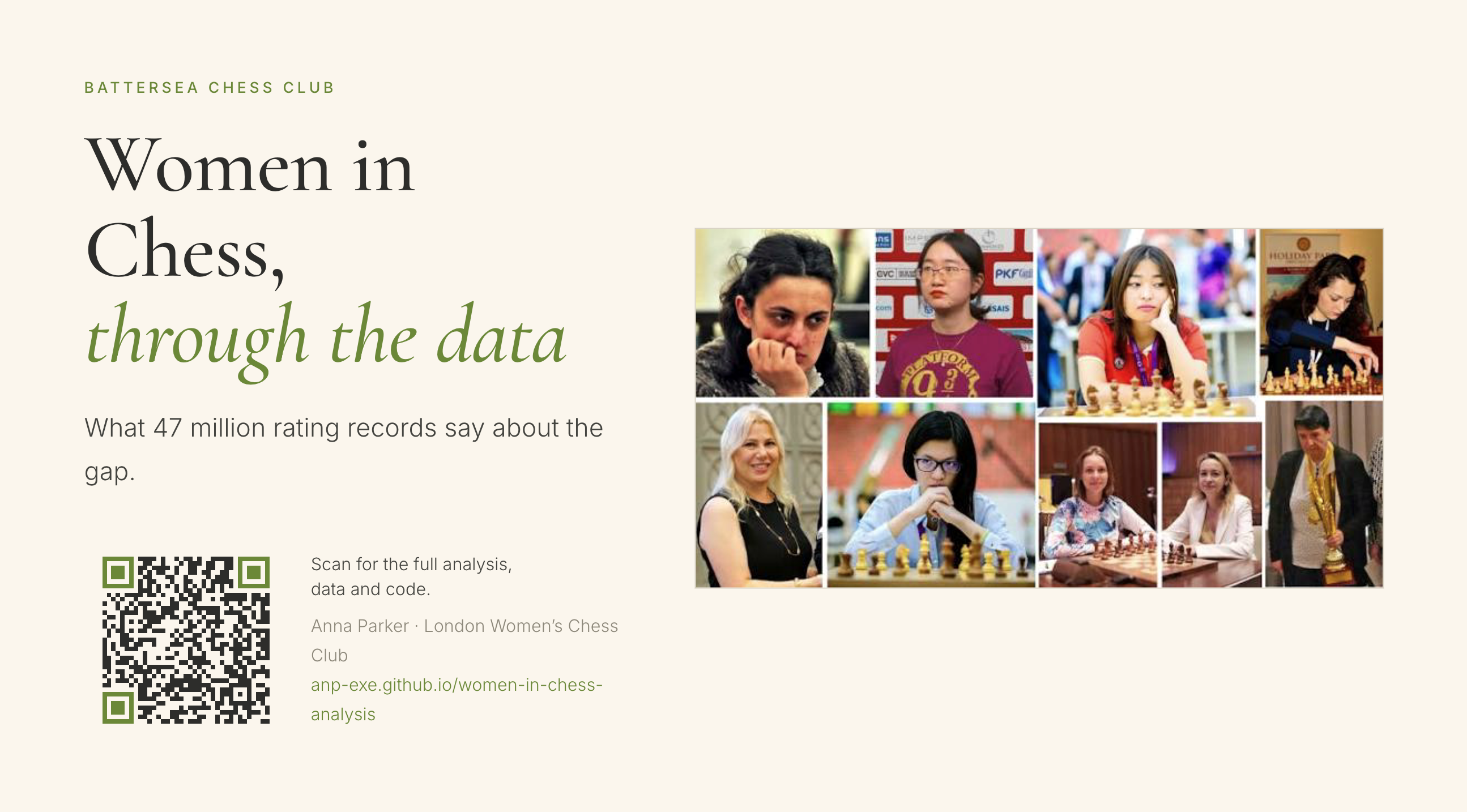
Upcoming talk
Women in Chess, through the data
Battersea Chess Club · 25 August
Open to all
A data story
1 in 9
One in nine FIDE rated chess players is a woman.
This is a data story about why.
SCROLL ↓
The question
When Netflix released The Queen's Gambit in October 2020, the chess world expected a revolution. A fictional orphan named Beth Harmon beat every male grandmaster in sight, millions of viewers discovered the game, and the streaming numbers broke records. I wanted to know whether any of that showed up in the actual data.
This is a personal project built from 130 monthly snapshots of the FIDE (Fédération Internationale des Échecs, the World Chess Federation) rating database, covering July 2015 through April 2026. The most recent snapshot contains 545,549 rated players, of whom 216,803 are currently active. The rest are inactive or retired players carrying frozen ratings, and every claim below about current players filters them out. Alongside that, I sampled around 12,000 chess.com profiles across six countries to reconstruct online signup patterns.
Part one
Two sides of the boom
Chess.com was quiet on the morning of October 23rd, 2020. By the end of November it was adding over 100,000 new members every single day. The company reported roughly 2.8 million people signed up in November alone.
I trained a Prophet time series model (Meta's open-source forecasting tool, designed to capture trend and seasonality) on pre show signup data from August 2017 through September 2020, then used it to forecast what chess.com growth would have looked like ifThe Queen's Gambit never aired. The gap between forecast and reality is the show's effect.
Figure 1
Interactive
Chess.com signups vs Prophet counterfactual
Calibrated to the median of three public benchmarks: 2.8 million signups in November 2020, 100 million total members by December 2022, and 150 million by October 2023. Pre intervention training MAPE 38.6 percent. Hover for the monthly gap between the two lines; the whole gap from October 2020 to December 2024 sums to about 84.2 million signups.
Excess signups
~84M
Cumulative chess.com signups associated with the post October 2020 boom, through December 2024, compared to the Prophet counterfactual.
Persistence
4 yrs
The actual signup curve never returns to the forecast baseline. The show did not cause a temporary spike. It shifted the trajectory permanently.
But the same analysis on FIDE's rating list told a completely different story. When I looked at new FIDE registrations rather than chess.com accounts, the trend did not spike after October 2020. It crashed.
Figure 2
Interactive
New FIDE registrations by sex, 2017 to 2024
The dashed line is the interrupted time series counterfactual with the Covid term kept but no show effect. At the intervention itself the level change is -20.3 registrations a month (p = 0.60), so the show cannot be separated from the post lockdown recovery already under way.
The show worked. It just turned new fans into online players, not tournament competitors. FIDE could not see the boom because the boom happened somewhere else.
Part two
Judit Polgár
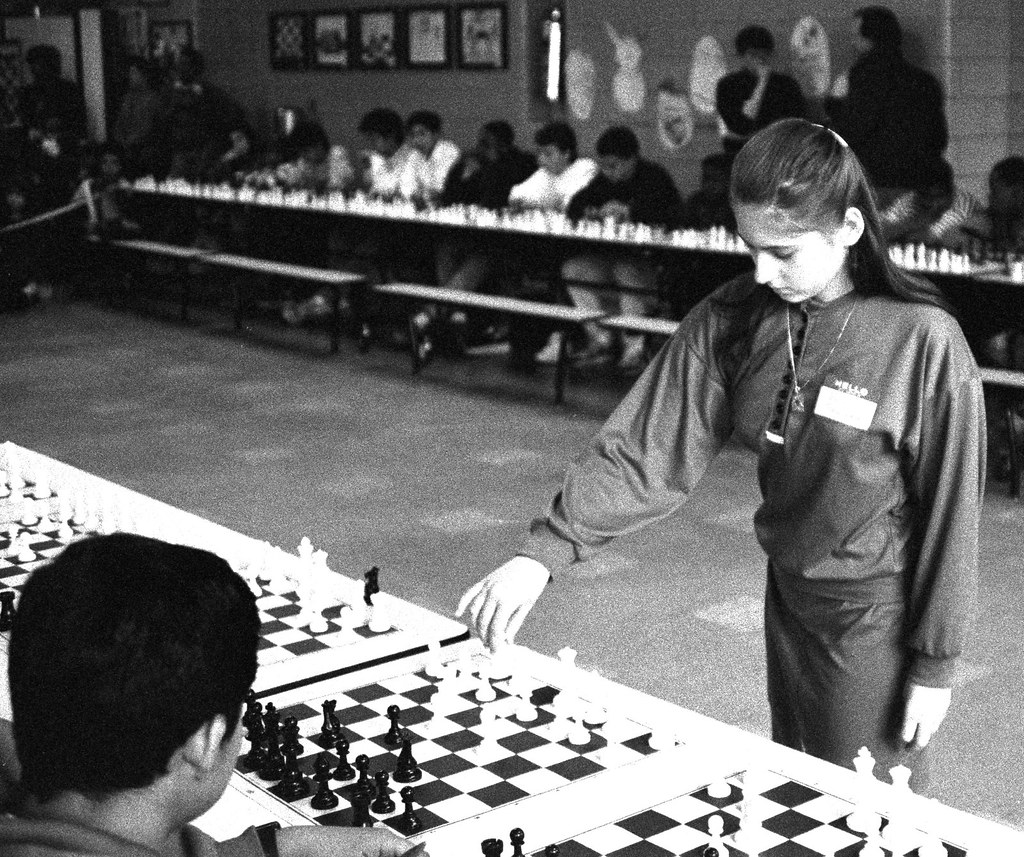
A young Judit Polgár playing a simultaneous exhibition. Source: Flickr.
Judit Polgár was born in Budapest in 1976, the youngest of three sisters raised by their father László as a deliberate experiment in nurture over nature. László believed that geniuses are made, not born, and set out to prove it by homeschooling all three daughters exclusively in chess from early childhood. The experiment worked. All three became titled players. Judit became something the chess world had never seen.
At 15 years and 4 months she became the youngest Grandmaster in history, breaking the record previously held by Bobby Fischer. She did not earn a Women's Grandmaster title. She earned the open Grandmaster title, competing against men. She spent her career refusing to play in women only tournaments. Her peak rating of 2735 in July 2005 placed her 8th in the world, the only woman ever to enter the global top 10.
Here is the statistic that says the most about how far ahead of the field she was. Judit retired in 2014 with a rating of 2675. More than a decade later, that number would still make her the highest rated woman in the world, 79 points clear of Hou Yifan, the strongest active female player today. She has not played a rated game in over eleven years, and she would still be first by a margin wider than the one separating today's number one from today's number five.
I don't think about whether I am a woman or a man when I sit at the chessboard. I just think about chess.
Figure 3
Judit, and the top 10 women today
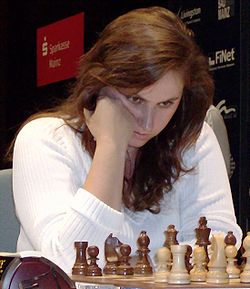
Judit Polgár 🇭🇺HUN
all-time peak, retired 2014
2735
2005 peak
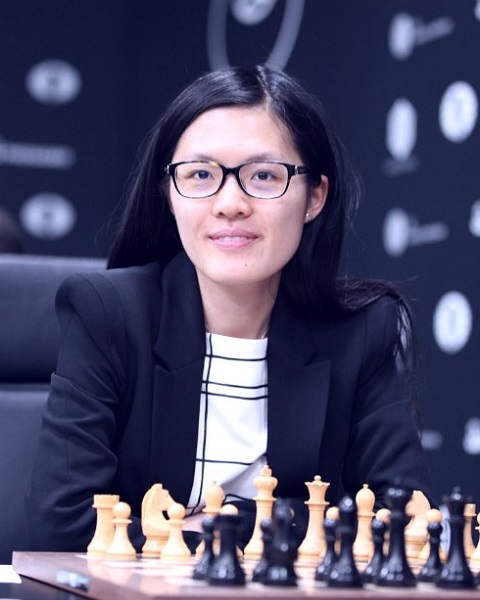
Hou Yifan 🇨🇳CHN
2596
Apr 2026
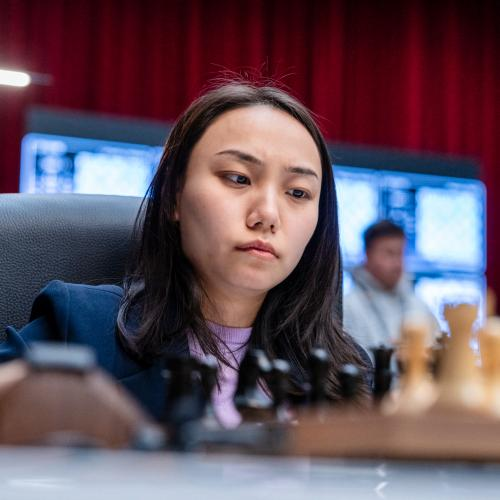
Lei Tingjie 🇨🇳CHN
2566
Apr 2026
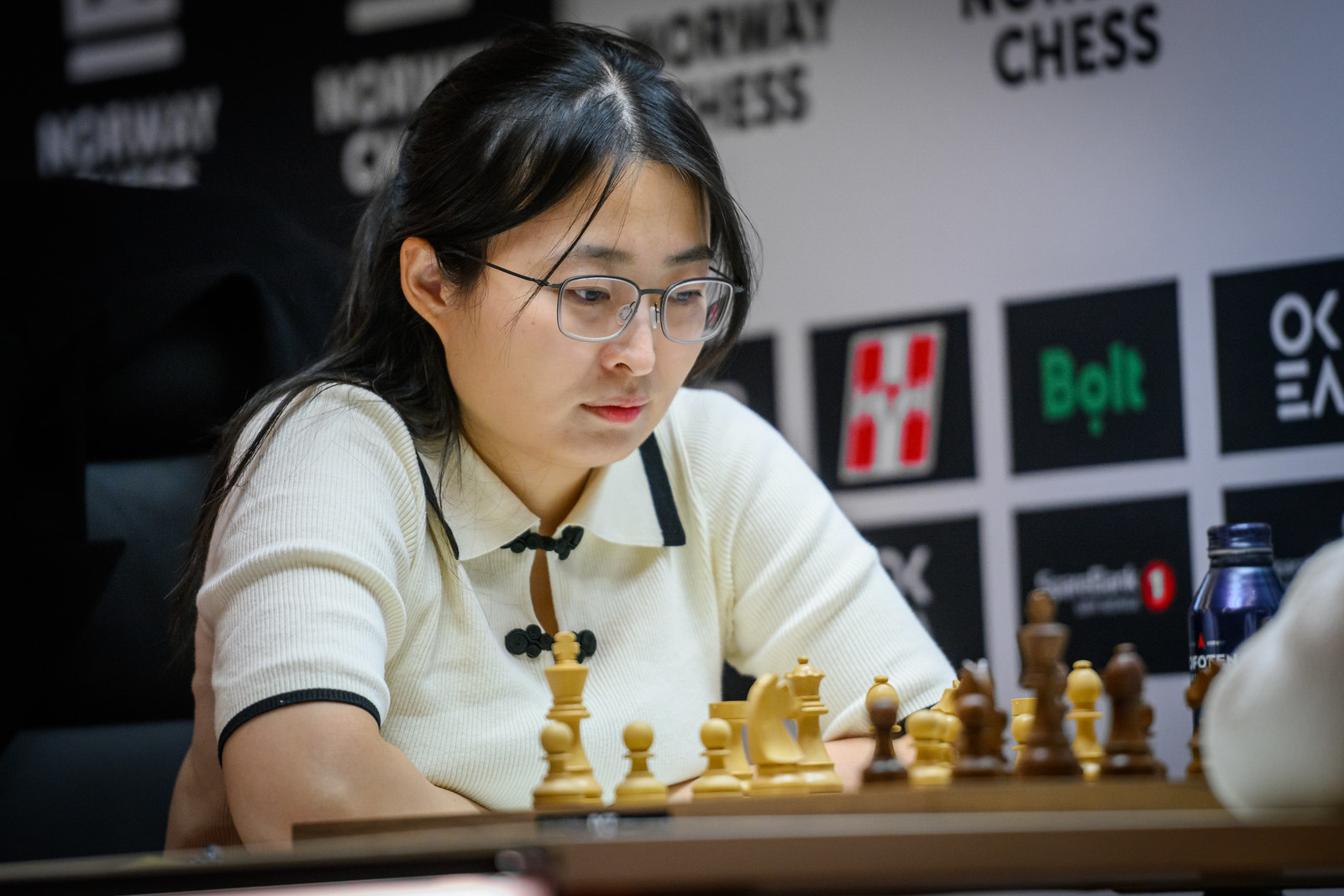
Ju Wenjun 🇨🇳CHN
2559
Apr 2026
Zhu Jiner 🇨🇳CHN
2554
Apr 2026
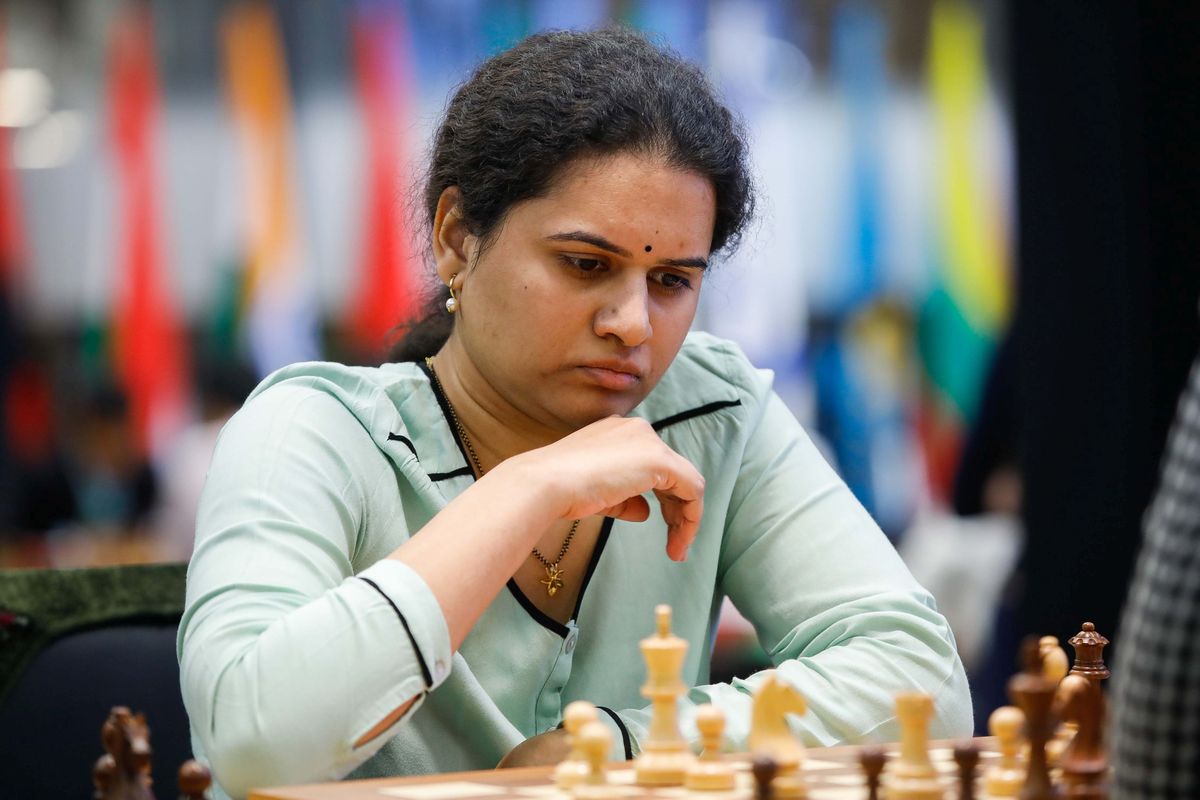
Koneru Humpy 🇮🇳IND
2535
Apr 2026
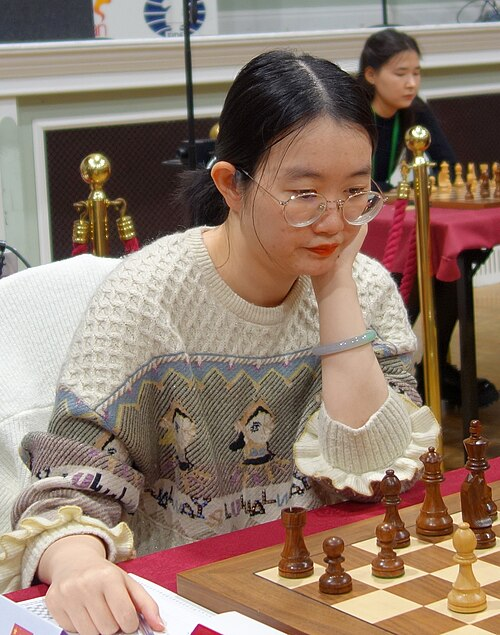
Tan Zhongyi 🇨🇳CHN
2535
Apr 2026
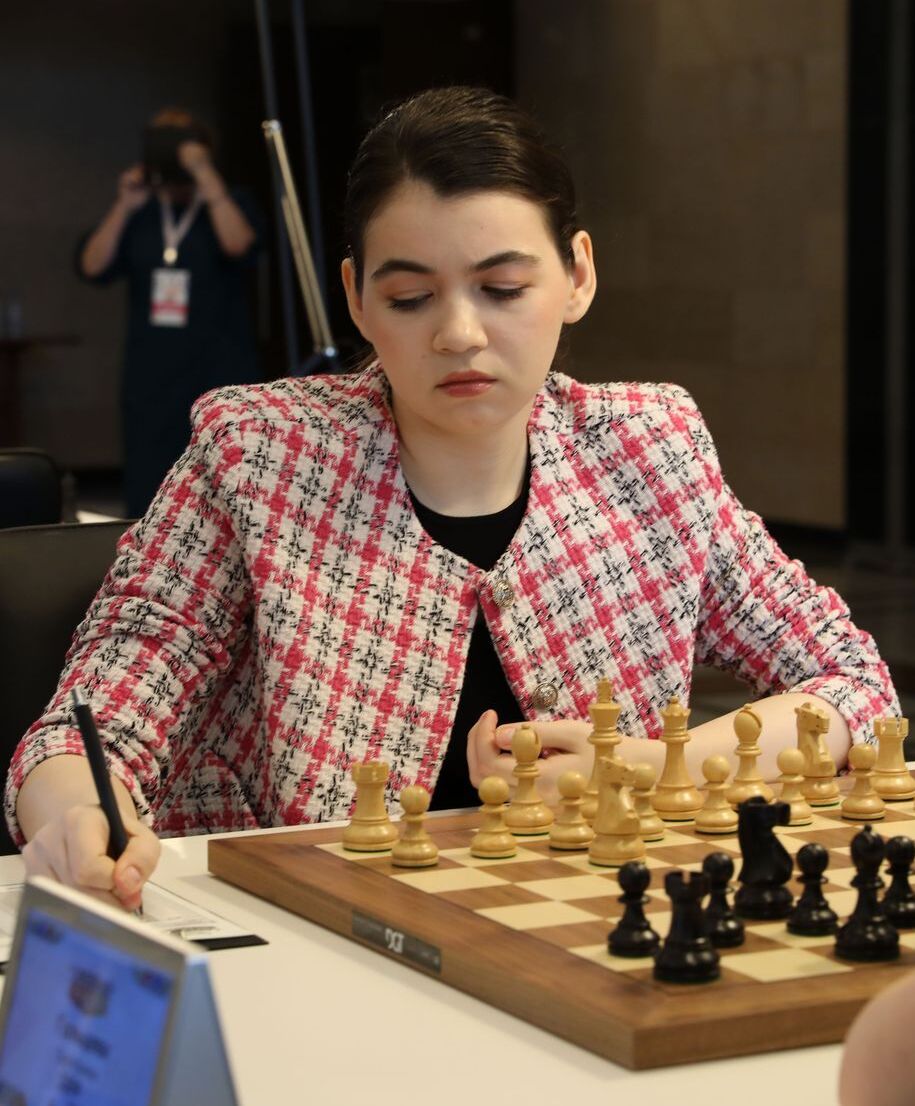
Aleksandra Goryachkina 🏳️FID
2534
Apr 2026
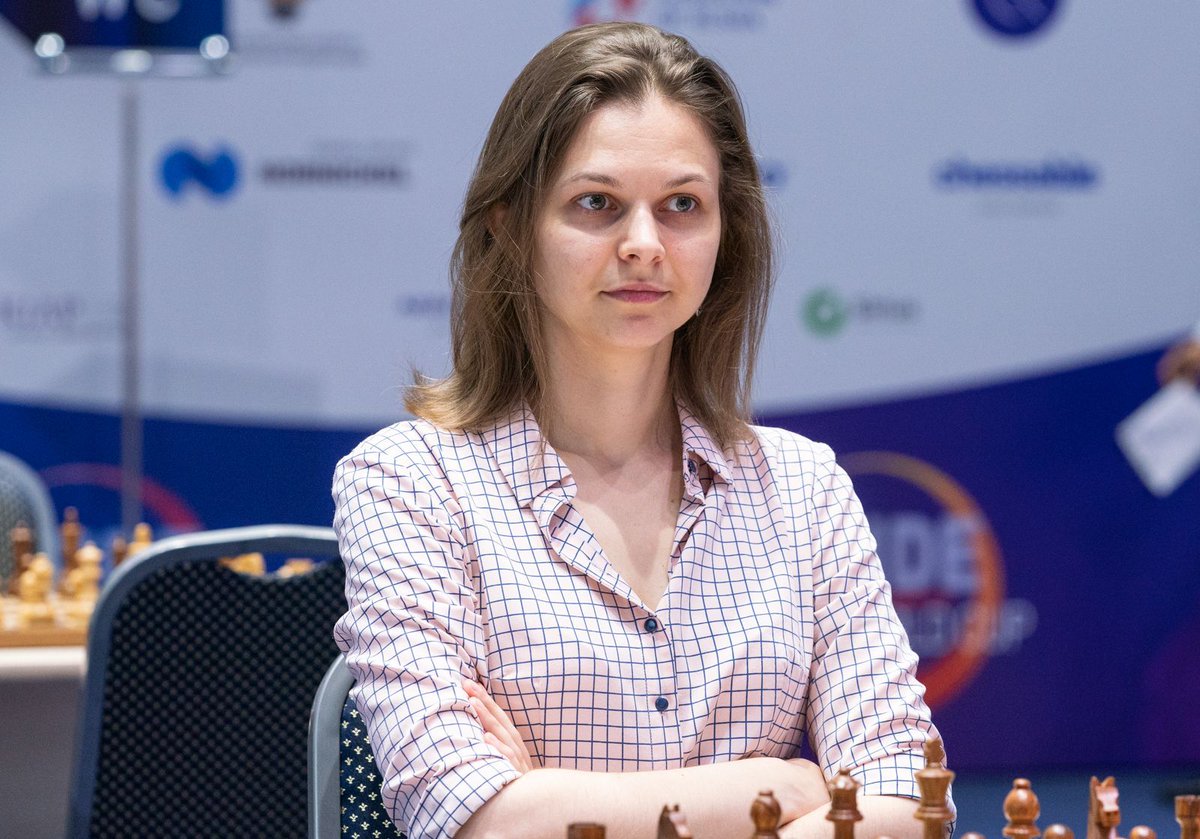
Anna Muzychuk 🇺🇦UKR
2522
Apr 2026
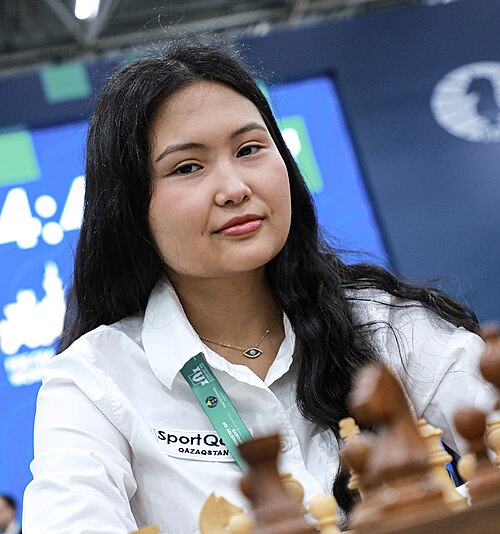
Bibisara Assaubayeva 🇰🇿KAZ
2516
Apr 2026
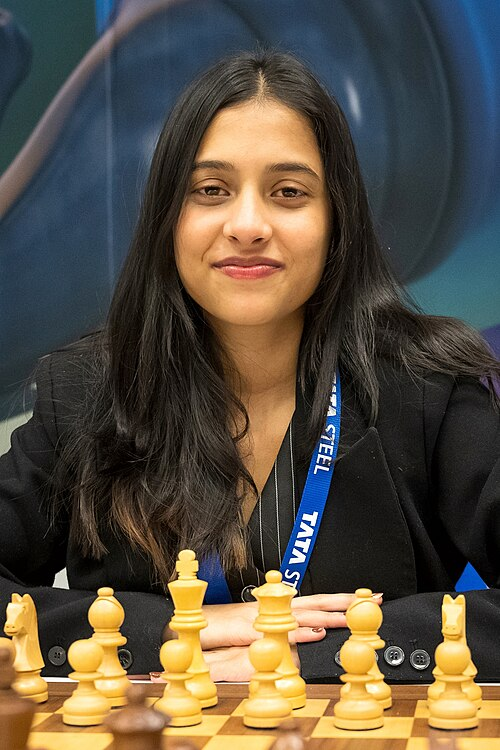
Divya Deshmukh 🇮🇳IND
2510
Apr 2026
Judit is listed on her all time peak of 2735 from July 2005, taken from published FIDE records, since it pre dates this dataset and she retired in 2014.
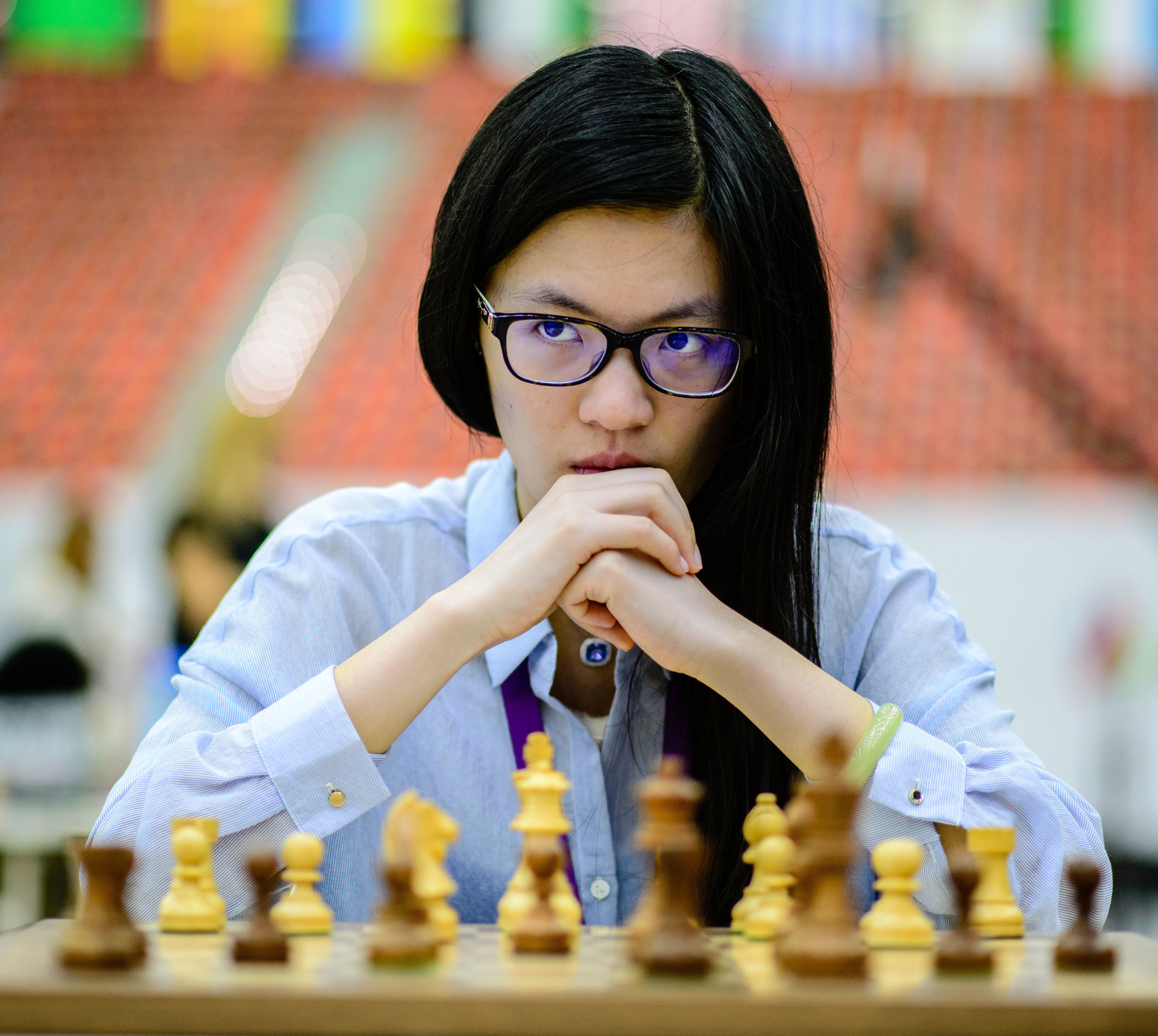
Hou Yifan, the highest rated active female player in this dataset with a peak of 2683. Source: Wikipedia.
On September 9th, 2002, in round 5 of the Russia vs The Rest of the World match in Moscow, Judit Polgár sat across from Garry Kasparov. He was rated 2838. She was rated 2681. Years earlier, Kasparov had called her a "circus puppet" and said women should stick to having children. Polgár chose the Berlin Defence line that Kasparov himself had used against Kramnik, forcing him to play against his own preparation.
She won. Press play.
Figure 4
Polgár vs Kasparov, Moscow 2002
Russia vs The Rest of the World, round 5. Rapid time control. Ruy Lopez, Berlin Defence.
Starting position
Press play
Move 0 of 83
Part three
When does the peak come?
A common claim in chess commentary is that women peak earlier than men, or drop out faster. I wanted to test it. One design decision matters here: retired players keep a frozen rating on file, and the highest point of a flat line is a retirement rating, not a career peak, so the pool is active players only. I took the 100 highest rated active women and the 100 highest rated active men in the dataset, reconstructed each player's full rating vs age trajectory, and measured where each career actually peaked, across the full top 100 a side and at a stricter top 25 a side cut.
Figure 5
Interactive
Where the careers actually peaked
How many of the 25 highest rated active players of each sex peaked in each five year band. The two distributions have the same shape and their means sit 0.5 of a year apart, 29.2 for women against 28.7 for men (p = 0.84), with a thin tail on both sides of players who peaked in their forties or later. Switch depth to check the shape is not an artefact of where the cut is made. The second button drops the 13 players whose highest observed rating sits on an edge of the eleven year window, whose real peak is either before the data starts or had not happened yet.
Mean peak age, women
29.2
Mean career peak of the 25 highest rated active women.
Mean peak age, men
28.7
Mean career peak of the 25 highest rated active men, half a year earlier than the women at this cut.
Figure 6
Interactive
Top 100 active players per sex
One dot per player: age at peak against peak rating. Dashed lines are the group means, 28.3 for women and 29.7 for men (p = 0.17); mean peak rating 2487 against 2746, a 259 Elo gap. Hollow dots are the 54 players whose best rating sits at an edge of the eleven year window, so the true peak is either before July 2015 or had not arrived. The two women far right are both of these; without all of them the means are 27.2 and 28.9 (p = 0.12). Points are nudged sideways where ages tie; hover for exact numbers.
Mean peak age, women
28.3
Mean career peak of the 100 highest rated active women.
Mean peak age, men
29.7
Mean career peak of the 100 highest rated active men, 1.3 years later than the women at this depth.
Elite women and men peak at the same age. Across both cuts the means sit within a year and a half of each other, and the direction of the difference flips between them: 29.2 against 28.7 at the top 25, 28.4 against 29.7 at the top 100. Neither difference is statistically significant. The folk belief that top women peak early and fade young is not in this data.
The other half of the picture is unambiguous. At every age from the early twenties to the fifties the mean rating line for men sits around 250 Elo above the line for women, and that distance barely moves across the whole span. The gap between elite men and women is a difference in level, held steady across a career, not a difference in the timing of the peak.
Part four
The counterfactual
If men and women play chess with the same underlying skill distribution but eight times as many men play, then the best man will beat the best woman in the dataset. Not because men are better, but because drawing eight times more samples from a distribution gives you a higher maximum. This is a property of statistics, not biology. The effect was documented at the German national level by Bilalić and colleagues in 2009. I wanted to see how much of it held at the international FIDE elite.
I pooled the ratings of all 251,137 active men and 30,420 active women into one empirical distribution (the null hypothesis that both sexes draw from the same skill pool) and then ran a Monte Carlo simulation of the top order statistics. Draw 251,137 players from that pool and 30,420 from the same pool, then compare the best of each. How far apart do the two top groups land when headcount is the only thing separating them?
Decomposing the 275 Elo top 100 gap
136 Elo points
139 Elo points
The idea is simple. The more people who play, the more chances at an exceptional one. With about eight men playing for every woman, the male game gets far more rolls of the dice at the top, and that alone lifts the male best above the female best. Give women equal numbers and their top players rise to close much of the gap.
The counterfactual puts a size on it: equal participation closes roughly 44 percent of the gap across the top 25 and about half across the top 100. The effect is smaller right at the summit, where a single outlier, Magnus Carlsen, sits well clear of everyone, and larger across the broader elite. Either way, a substantial part of the gap is not about ability at all. It is about how many women are in the game.
That is a weaker effect than the 96 percent Bilalić found in Germany, and the reason is the size of the pool he was working from. His 100 women came out of about 7,000 German players. Mine come out of 30,420 worldwide. The smaller the pool, the less exclusive its top 100 is, and the further down a ranking list you go, the more of the gap headcount explains.
Interactive
What happens to the gap as participation equalises?
Drag the slider to change how many men play for every woman. The green part of the bar is the share of today's gap that sample size mathematics predicts, and it shrinks as participation equalises. The rose part is the distribution difference, which participation alone does not touch.
predicted top 25 gap with 30,420 active women (today's actual ratio)
Percentages are shares of the observed 253 Elo gap at top 25. Switch depth above to see the sample size share rise the deeper into the rankings you look.
This is chess today: sample size mathematics accounts for 44 percent of the observed 253 Elo top 25 gap.
The rest is the part headcount cannot reach. It is the distance between the women who actually play and an ordinary sample of chess players, and this data cannot prove what creates that distance. What it can say is that a game which loses its girls at 15 loses them in the exact years a 2600 is built. Why they leave is the subject of the last section.
Part five
When will the participation gap close?
The share of active FIDE players who are women rose from 9.5 percent in 2015 to 10.4 percent now. That is progress, but less than one percentage point in a decade.
Figure 7
Interactive
Women as a share of active FIDE players, with the current pace extended
The whole journey at the pace of the last five years, 0.0875 points a year: from 9.49 percent in 2015 to half of all rated players in 2479, 453 years out. Every observation this project has is the first flick, before the axis moves. It is arithmetic on what the last decade did, not a forecast, and it is the argument for changing the pace rather than waiting it out.
Women reach parity
2479
At the current pace, under 0.1 points a year, half of all rated players are women in 2479. That is 453 years away.
Men per woman today
8.6 : 1
194,192 active rated men against 22,611 women in the April 2026 list. Women are 10.4 percent of active players.
The gap at the top is mostly a headcount problem, and the headcount is barely moving. At this pace it will not close for generations. That is not fixed by women playing better. It is fixed by more girls starting and more of them staying, which is exactly where the retention and culture research points.
The takeaway
What this actually says
The online chess boom that followed The Queen's Gambit was real and it lasted: four years on, signups have never fallen back to the pre show baseline. Competitive chess missed that wave, because Covid had cancelled the tournaments a FIDE rating requires. Judit Polgár remains the greatest female player of all time at 2735, clear of everyone in the modern era. Men and women reach their rating peaks at the same age. And 44 to 68 percent of the gap between the world's best men and best women, growing with ranking depth, is the mathematics of how many people play.
The conclusion is not that women are worse at chess. It is that we are producing fewer elite female players than we should be, and that equal participation alone would not close the gap without also changing how female players are developed, supported and retained. The sample size half is the easy half. The cultural half takes longer.
Limitations
What this data cannot tell us
The FIDE dataset starts in July 2015, so pre-2015 peaks like Polgár's are frozen at retirement rating. About 60 percent of the database is inactive at any snapshot, and every current-player claim filters that out. The chess.com sample of 12,000 profiles makes the 84 million excess-signups estimate order of magnitude accurate, not precise, and the Prophet model's pre intervention error was 38.6 percent. The show also shares its window with the pandemic and the rise of chess streaming, so the online boom is attributed to that window rather than to the show alone. The participation share explained ranges from 29 percent at top 1 to 68 percent at top 10,000; the qualitative finding is robust, any single percentage is not.
An earlier version of this page found 55 percent of a 164 Elo gap explained by sample size, using a flawed method that mixed in inactive players' frozen ratings, including Polgár's, so it compared Carlsen today against a rating twelve years stale. Against the strongest woman still competing the gap is 225 Elo, and the corrected method uses order statistics on the pooled empirical distribution.
What is left over
So what is the other half?
Participation arithmetic accounts for half the gap across the elite. The rest is a difference between the two rating distributions, and this dataset cannot say what causes it. The published research can narrow it down.
Early environment
Where girls make up at least half of new young players, their starting ratings are no lower than boys'. Later work found the same pattern geographically: the rating gap is smaller in areas where more girls play.
Chabris & Glickman 2006, Psychological Science · Li, Glickman & Chabris 2025, CHANCE
Tournament culture
An open letter written by 14 French players in August 2023 grew to over 100 signatories within days and more than 120 since. It states that harassment and assault are among the main reasons women and teenage girls stop playing. Several signatories described being harassed by trainers at 14 or 15 and quitting.
"We, women chess players", open letter, 2023
Retention
Girls do drop out at higher rates in the raw data. Across nine years one cohort fell from 18 percent girls to 11 percent. But once boys and girls are matched on rating and starting age, the difference all but disappears and the retention curves track each other closely. Whatever drives the dropout, it is not simply being female.
Li, Glickman & Chabris 2025 · Chabris & Glickman 2006
Stereotype threat
Found, then not found, then found again. A 2008 experiment reported women playing worse when told their opponent was male. A 2018 analysis of tournament games found the opposite, that women slightly outperform expectations against men. A 2020 reanalysis argued the effect is there after all. This one is unresolved and anyone citing it confidently in either direction is overreaching.
Maass, D'Ettole & Cadinu 2008 · Stafford 2018 · Smerdon et al. 2020
These are not mutually exclusive, and this data cannot rank them. What is clear is that every one of them is a claim about circumstances rather than capacity, and that the two best supported entries point the same way: where girls enter chess in equal numbers and under equal conditions, there is no gap at entry to explain.
About
Anna
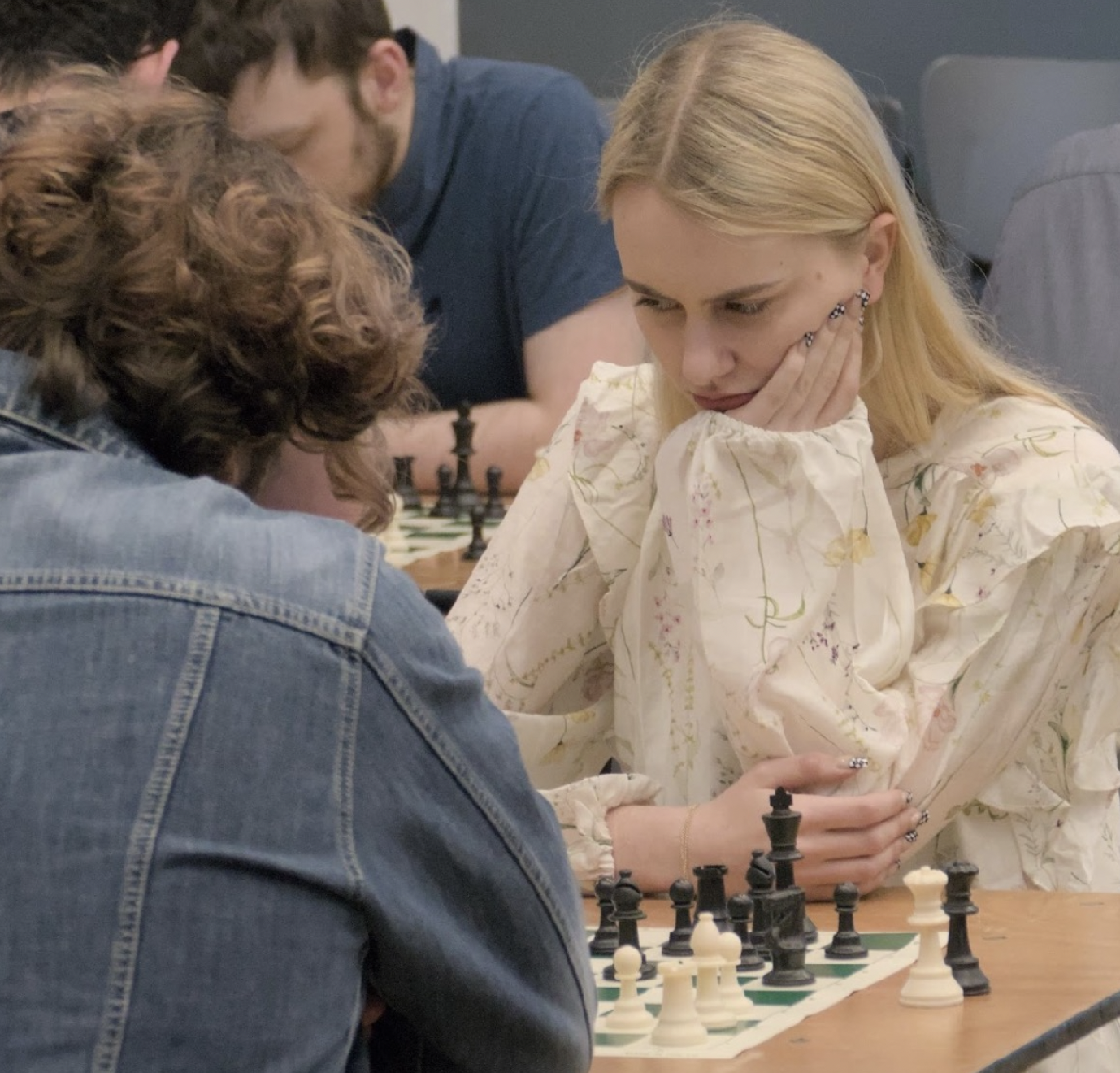
AI student at King's College London with an associate data scientist certification, working mostly in Python. Outside academia I occasionally trade blue light for a chess board, and I play in the London Chess League. I reached 1500 in a year of playing.
I volunteer at the London Women's Chess Club, where I coach beginners unofficially and run the website. This project was inspired by the work of Bilalić et al., and by curiosity about whether the same pattern would hold among the FIDE elite.